Dat met een gijzelaar een gegijzelde persoon wordt bedoeld, is eigenlijk vreemd. Het achtervoegsel -aar betekent namelijk meestal juist ‘iemand die een handeling uitvoert’. Zo is een bedelaar ‘iemand die bedelt’, een brabbelaar ‘iemand die brabbelt’ en een handelaar ‘iemand die handelt’. Het begrip gijzelaar kan op twee manieren worden gebruikt. Een gijzelaar is enerzijds een persoon die tegen de eigen wil door een misdadiger gevangen wordt gehouden met het doel iets van de persoon zelf of van derden gedaan te krijgen, waarop de gevangene vrijgelaten gaat worden.
Gijzelaar twee betekenissen Een gijzelaar is een vaak onschuldig persoon die tegen zijn wil gevangen wordt gehouden door iemand anders. Een gijzelaar wordt vaak bedreigd om er zo voor te zorgen dat anderen iets doen, zoals veel geld betalen.
Hostage dual meaning
Since the Iran hostage crisis, the Islamic Republic of Iran has engaged in a pattern of detaining foreign nationals for extended periods. [1] According to the Center for Human Rights in Iran, the Iranian government has used imprisoned dual and foreign-only nationals "as bargaining chips in its dealings with other nations.". Collective Action Is Only Way to Address Iran’s Hostage Taking Conditions of Imprisoned Dual and Foreign Nationals: “Comparable to torture under international law” April 14, —The Center for Human Rights in Iran (CHRI) welcomes the collective action undertaken by the European Union (EU) to sanction seven Iranian prison and judicial officials for their role in the unlawful.
Hostage dual meaning Hostage taking, as we know, is the act of detaining a person in order to compel a third party, often a state, to do or abstain from doing some act as an explicit or implicit condition of the release of the hostage. Now, I don't necessarily share the view that hostage taking, and arbitrary detention are different.
Ambiguous vocabulary
Something ambiguous is unclear or vague, like the end of a short story that leaves you scratching your head. But if you're ambivalent about something, you can take it or leave it. Whatever. Synonyms for AMBIGUOUS: cryptic, obscure, dark, enigmatic, enigmatical, vague, mysterious, unclear; Antonyms of AMBIGUOUS: obvious, clear, unambiguous, unequivocal, plain, understandable, accessible, distinct.
Ambiguous vocabulary Ambiguous Language Examples. 1. “Go do the thing we talked about yesterday” Cause: Vague identifier. Generally, when we refer to something, we want to refer to it in a way that our language ensures we are exclusively speaking of that one thing.
Wordplay example
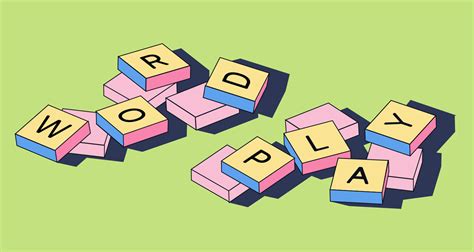
Wordplay is everywhere! Learn the meaning of wordplay, how it works, and 16 different types of wordplay, with examples from literature. Learn about different types of wordplay, such as puns, alliteration, assonance, rhyme, euphemism, and more. See how wordplay can be used for humor, creativity, or clarity in various contexts and languages.
Wordplay example Word play is a form of wit that uses words in different ways to create humor, ambiguity, or meaning. Learn about puns, alliteration, palindromes, and other types of word play with examples from literature and poetry.
Linguistic ambiguity
Linguistic ambiguity is a quality of language that makes speech or written text open to multiple interpretations. That quality makes the meaning difficult or impossible for a person or artificial intelligence program to reliably decode without some additional information. Ambiguity is conventionally defined in Linguistics as a property of a word or an utterance that has two meanings or two interpretations, and is usually classified as lexical, morphological, syntactic (or structural), and pragmatic.
Linguistic ambiguity This module deals with Ambiguity, a major component in Semantics, one of the four significant wings of Linguistics. Also other parameters which causes ambiguity, its types, the purpose of Ambiguity, when and how to avoid ambiguity, its advantages etc, will be discussed in the module to enhance the holistic understanding of the concept.